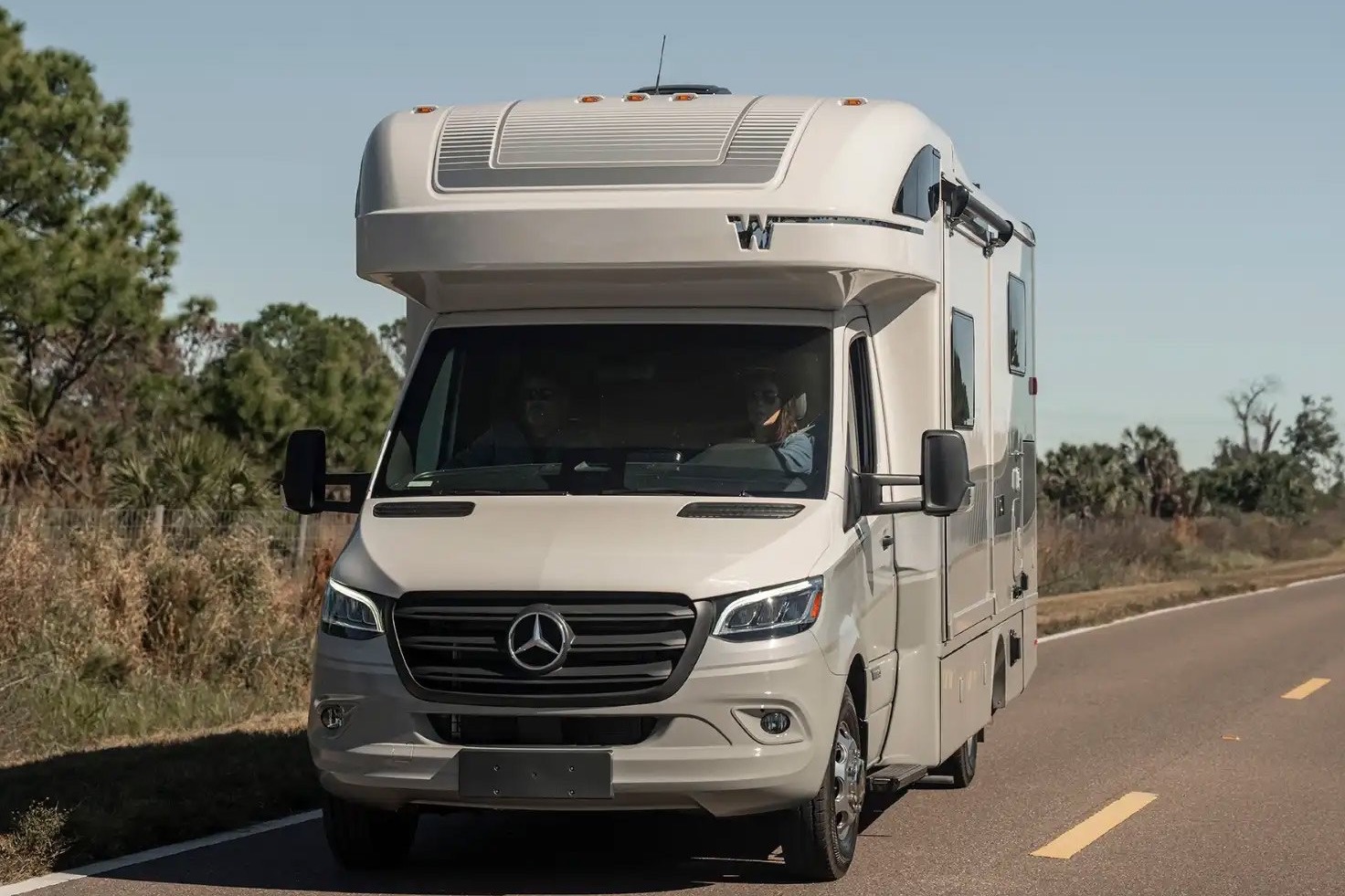
While both coaches represent the upper echelons of their respective brands, they tackle the "luxury couple’s coach" design brief with vastly different interior layouts and…
The luxury compact Class C motorhome market is fiercely competitive. Discerning RVers looking for the ultimate balance of maneuverability, premium amenities, and high-end automotive engineering almost universally narrow their choices down to coaches built on the Mercedes-Benz Sprinter chassis. Two titans leading this segment are the Winnebago View 24T and the Jayco Melbourne Prestige 25LP.
While both coaches represent the upper echelons of their respective brands, they tackle the "luxury couple’s coach" design brief with vastly different interior layouts and boondocking philosophies. This head-to-head comparison breaks down how they stack up in performance, living space, utility, and off-grid capability to help you determine which belongs in your driveway.
1. Chassis and Performance: The Mercedes Foundation
Both motorhomes are built on the venerable Mercedes-Benz Sprinter chassis, featuring the modern 2.0L high-output four-cylinder turbo-diesel engine paired with a 9-speed automatic transmission. This powertrain delivers an exceptionally smooth, car-like ride with plenty of low-end torque for mountain passes and a 5,000-pound towing capacity. They also both feature advanced safety tech, including DISTRONIC PLUS adaptive cruise control, lane-keeping assist, and active brake assist.
However, the structural implementation differs slightly:
- Jayco Melbourne Prestige 25LP: Built on the heavy-duty Mercedes 4500 chassis variant, it boasts a Gross Vehicle Weight Rating (GVWR) of 12,125 lbs. This extra payload capacity is crucial given its slide-out configuration and solid build materials. Jayco also includes its Customer Value Package with hydraulic leveling jacks as standard equipment.
- Winnebago View 24T: Winnebago lists the 24T with an 11,030 lb GVWR, but it counters with a highly engineered, weight-optimized construction system. Winnebago includes automatic front and rear hydraulic leveling jacks standard on the 24T floorplan to ensure rapid, stress-free campsite setup.
2. Floorplan & Living Space: Murphy Bed vs. Rear King
The single most definitive differentiator between these two RVs is how they utilize their square footage, particularly when it comes to sleeping quarters.
Winnebago View 24T: The Daytime Oasis
The View 24T utilizes a Murphy+ Queen Bed system (60” x 75”) built into the driver-side slideout. By stowing the bed vertically during the day, the 24T transforms into a remarkably open living room. Facing the slide-out area are standard premium power-reclining theater seats complete with swivel lap tables. When the bed is up, you get a massive amount of floor space and an ideal environment for entertaining or relaxing in front of the 32" LED HDTV. The downside? You have to lower the bed every night, which partially blocks the main living pathway.
Jayco Melbourne Prestige 25LP: The Dedicated Bedroom
Jayco takes a traditional approach in the 25LP by offering a permanent rear King-size bed. This is a massive selling point for RVers who refuse to compromise on mattress size or sleep comfort. Because the bed is always available, you can take a quick nap without rearranging the coach. To accommodate this, the living area features a large U-shaped dinette with stow-away pedestal legs. While highly functional for meals and working remotely, a dinette rarely matches the lounge-style relaxation comfort of the View’s theater seats.
3. Galley and Bathroom Amenities
Both kitchens feature a premium split-cooking setup: a two-burner cooktop containing one LP burner and one induction burner, allowing you to save propane when plugged into shore power. Both also sport a 10 cu. ft. 12V compressor refrigerator and a convection microwave.
The View 24T sneaks ahead in galley storage by integrating a dedicated pantry and a flip-up countertop extension.
In the dry bath, both models offer generous space for a 25-foot motorhome:
- The Jayco 25LP provides a 30" x 36" shower and features the Aqua View SHOWERMI$ER water management system, which recirculates cold water back into the fresh tank while waiting for the water to heat up—a massive boon for conserving water.
- The Winnebago 24T features a slightly smaller 30" x 34" shower but compensates with a standard residential-style water filtration system and an upscale design aesthetic.
4. Off-Grid Capability & Boondocking Infrastructure
If your travel style includes Harvest Hosts, state parks, or boondocking on BLM land, the engineering underneath the coach matters just as much as the layout. Here, Winnebago’s recent engineering updates shine.
Winnebago’s Off-Grid Powerhouse
The View 24T floorplan is an electrical marvel. It completely discards the traditional standard LP generator in favor of a massive 320-amp-hour Lithionics LiFePO4 lithium battery equipped with an internal heating system for cold-weather operations. It is paired with a dedicated 280-amp second alternator (under-hood generator) that rapidly charges the house battery bank while the Mercedes engine is idling or driving. Combined with 240W of roof-mounted flexible solar panels and a 2,000-watt pure sine wave inverter, the View 24T can run heavy appliances—including the air conditioner—briefly off the house batteries without firing up a noisy generator.
Jayco’s Traditional Reliability
The Melbourne Prestige 25LP utilizes a more conventional power ecosystem. It relies on a 4,000-watt LP generator and two traditional 12V house batteries, supported by a 200W solar panel with a dual controller. While this system is robust, field-tested, and perfectly adequate for standard camping, it requires you to burn through your propane supply to generate AC power. If you camp in generator-restricted zones or prefer silent operations, the Jayco will require aftermarket battery upgrades to match the Winnebago.
Tank Capacities
Capacity